
Author: Giulia Martino (Ecorys)
Rural proofing rarely follows a neat or linear path. When applied in real settings, it quickly raises practical questions. Who produces the evidence? Who makes sense of it? And who finally uses the results? These questions were explored during a workshop held as part of a GRANULAR cross-visit held in April the Netherlands, which brought together members of the project’s Multi-Actor Labs and representatives from the hosting municipalities. The aim was simple but important: to reflect collectively on how rural proofing works in practice and on the roles different actors play along the way.
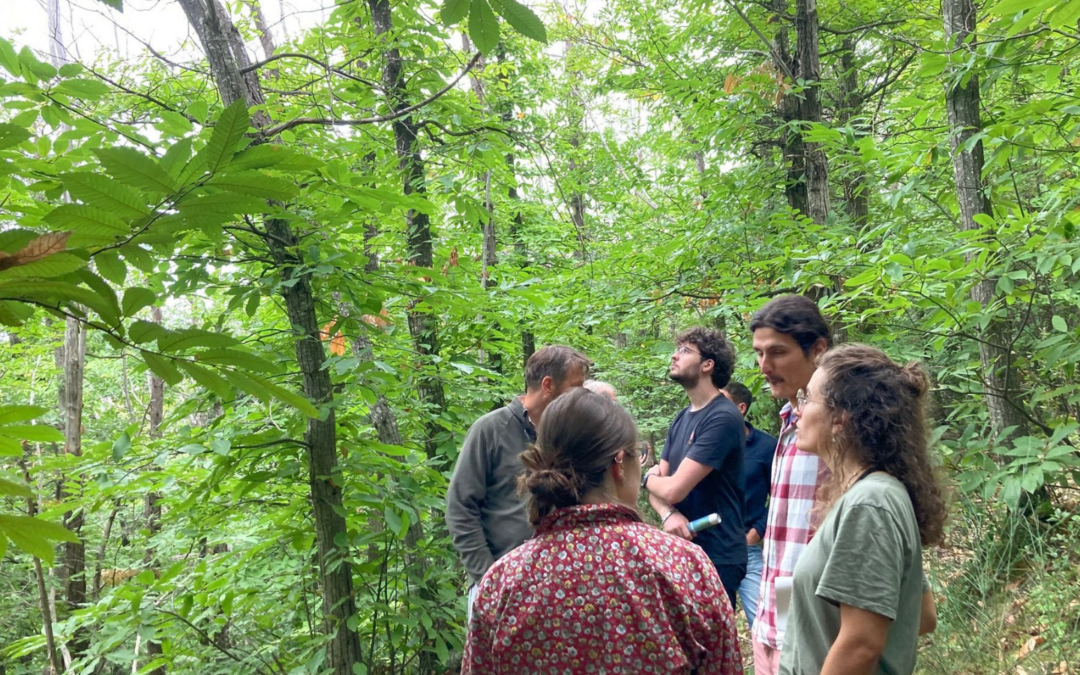
A workshop based on movement and discussion
Rather than starting with presentations, the workshop built as an interactive exercise. Participants were invited to move physically around the space and position themselves next to the role that best reflected how they saw themselves in the rural proofing process.
Three roles (or “buckets”) were proposed: generators, translators and testers. These categories are often used to describe how knowledge is produced, interpreted and applied in policy processes. What initially looked like a straightforward task quickly led to lively discussion. It became clear that rural proofing roles are far more fluid and overlapping than diagrams might suggest.
Generators: producing evidence in different ways
The role of “generator” was the easiest to identify. Most researchers placed themselves in this group. They highlighted their role in providing indicators, analytical frameworks and technical expertise. These elements help make policy impacts visible and support structured assessment, which is central to the GRANULAR rural proofing approach.
At the same time, Multi-Actor Lab participants and local actors stressed that they also generate essential knowledge. This often comes through local case studies, concrete examples and lived experience. These inputs capture local nuance and context that are not always reflected in datasets. The discussion underlined that effective rural proofing depends on combining formal data with place-based knowledge from rural communities.
Translators: bridging levels and languages
The “translator” role was harder to pin down. Participants who gathered here included representatives of associations and intermediary organisations that regularly work between local actors, researchers and policymakers. Several researchers also identified with this role, particularly those who had acted as facilitators during Living and Replication Lab activities and workshops.
This prompted reflection on how central translation is to rural proofing. Translators help turn local experiences into insights that policymakers can work with. They also help explain analytical results back to practitioners and communities. Within the GRANULAR Multi-Actor Labs, this role is especially important, as rural proofing often involves multiple governance levels and diverse actor groups. Participants noted that combining the roles of generator and translator can be demanding, but it can also strengthen coherence across the process.
Testers, users and open questions
The “tester” role also proved less straightforward than expected. Many civil servants positioned themselves here, describing their role as using rural proofing results to inform policy decisions. However, participants quickly pointed out that this depends strongly on how the rural proofing exercise is initiated.
When rural proofing is commissioned by the authority responsible for a policy, civil servants may act mainly as users or receivers of results. In more bottom-up initiatives, often driven by Living Labs or local actor groups, researchers may also test the outcomes to assess whether the process and findings are sound and relevant. This raised a broader question that remained open throughout the discussion. Where do local rural actors fit? In practice, they often generate knowledge, help interpret it and assess whether results reflect local realities.
What this means for rural proofing
One key message emerged from the workshop. Roles in rural proofing are not fixed. Different actors can wear different hats and fit in different “buckets” at different stages of the process. What matters most is not strict categorisation, but ensuring that all roles are represented, well connected, and activated at the right time.
These reflections directly informed the final phase of rural proofing work under the GRANULAR project. They also highlight the value of Multi-Actor Labs as spaces for shared learning, where evidence, local experience and policy perspectives come together to support more place-sensitive rural policies. Stay tuned for more updates on the GRANULAR Rural Proofing! ves, often driven by Living Labs or local actor groups, researchers may also test the outcomes to assess whether the process and findings are sound and relevant. This raised a broader question that remained open throughout the discussion. Where do local rural actors fit? In practice, they often generate knowledge, help interpret it and assess whether results reflect local realities.
What this means for rural proofing
One key message emerged from the workshop. Roles in rural proofing are not fixed. Different actors can wear different hats and fit in different “buckets” at different stages of the process. What matters most is not strict categorisation, but ensuring that all roles are represented, well connected and activated at the right time.
These reflections directly informed the final phase of rural proofing work under the GRANULAR project. They also highlight the value of Living Multi-Actor Labs as spaces for shared learning, where evidence, local experience and policy perspectives come together to support more place-sensitive rural policies. Stay tuned for more updates on the GRANULAR Rural Proofing!