

Author: Maite Iglesias & Merveille Ntabuhashe
Designing better policies for rural areas requires better ways of measuring what actually matters. This was the central message emerging from the GRANULAR Knowledge Transfer Accelerator Bootcamp held online today, which brought together over 100 participants from across Europe, including policymakers, researchers and practitioners to discuss how indicators can better reflect rural realities and support more effective EU policymaking.
Organised by the European Association for Innovation in Local Development (AEIDL), the bootcamp consisted of two complementary webinars examining how wellbeing-oriented metrics and performance indicators can improve the design, monitoring and evaluation of policies affecting rural areas.
Opening the event, Serafin Pazos-Vidal from AEIDL highlighted the growing importance of developing place-sensitive indicators that go beyond traditional economic measures. While Gross Domestic Product (GDP) remains the dominant metric in policy assessment, it often fails to capture the complexity of rural territories and the lived experience of rural communities.
Beyond GDP: measuring wellbeing in rural areas
The first webinar focused on the limitations of GDP as a measure of prosperity and explored alternative ways to assess wellbeing and quality of life in rural territories.
Laura Rayner from the ZOE Institute for Future-Fit Economies opened the discussion by explaining why the European policy debate is increasingly moving “beyond GDP”. She highlighted the need for indicators that better reflect sustainability, social wellbeing and long-term resilience, and highlighted the need to develop new policy ideas and feasible solutions that place people’s needs at the centre of economic policy in Europe.
Experts then explored different approaches to measuring wellbeing in rural areas. Peter Benczur from the Joint Research Centre presented the Sustainable and Inclusive Wellbeing Indicator, an initiative aimed at complementing GDP with broader measures of societal progress. which aims to develop indicators that go “beyond GDP” by incorporating environmental and social dimensions of prosperity, alongside economic performance. The initiative supports the European Commission’s efforts to progressively complement GDP with wellbeing indicators in EU policymaking, helping to better monitor progress towards sustainable prosperity and the wellbeing of current and future generations.
Finally, Gundi Knies from the Thünen Institute discussed indicators capturing rural wellbeing and quality of life, showing why economic indicators such as GDP alone cannot fully reflect how people experience life in rural areas. Drawing on findings from the GRANULAR report “Wellbeing and Quality of Life in Rural Europe” (2025), she explained how subjective wellbeing indicators provide a complementary perspective to traditional economic metrics. The research highlights how wellbeing in rural areas reflects multiple dimensions (including life satisfaction, daily mood, resilience, trust and social cohesion) and how these interact with local economic, social and environmental conditions. While GDP can capture economic output, these indicators reveal additional factors shaping rural prosperity, such as environmental quality, community ties and neighbourhood conditions. Overall, she emphasised that rural prosperity depends on a combination of economic, environmental, social and psychological factors.
The new EU budget and what it means for rural indicators
The second webinar turned to the future of EU policymaking, focusing on how the proposed 2028–2034 Multiannual Financial Framework (MFF) could reshape the role of indicators in European funding programmes.
David Bokhorst from the European University Institute presented the new performance framework linked to EU funding, which places stronger emphasis on indicators, milestones and measurable results. The framework aims to link EU funding more closely to the achievement of agreed targets, with disbursements tied to the fulfilment of specific milestones and objectives within national and regional partnership plans. It also promotes the use of standardised indicators to monitor progress at programme or project level. However, Dr Bokhorst highlighted some limitations of relying mainly on these common indicators, which often focus on outputs (such as the number of facilities built or participants reached) rather than the broader results or impacts of interventions. To address this, he stressed the importance of “diagnostic monitoring”, using more tailored programme- or project-specific indicators that can help detect implementation problems early and allow policymakers to adapt measures in real time.
Serafin Pazos-Vidal (AEIDL) then discussed the potential implications for rural areas. He noted that the proposed EU funding framework for 2028–2034 introduces more integrated national masterplans and a new performance framework based on indicators, milestones and targets that will determine the delivery of funds. While the new approach may strengthen accountability and coordination between EU funds, there is also concern that indicators defined mainly at national level may fail to capture local and regional diversity. Many of these indicators are not sufficiently “granular” to reflect the realities and impacts of policies in rural areas. He stressed that ensuring proper “rural proofing” and a better understanding of subregional impacts will be essential to avoid one-size-fits-all national approaches. He also drew on ongoing policy work led by AEIDL on topics such as gender, transport, housing and access to services, sharing lessons from several projects including GRASS CEILING, RURACTIVE, RURBANIVE, FUTURAL, SMART ERA, BEATLES and CODECS.
Evidence from the GRANULAR project was presented to help address this challenge. Carlos Tapia from Nordregio shared ongoing research on rural attractiveness and perceptions (to be published in April 2026), highlighting how people’s experiences and expectations of rural life should be reflected in policymaking. His presentation highlighted how demographic trends and perceptions of rural life vary widely across rural areas, raising the question of whether policy and research may overlook well-performing rural regions by focusing primarily on areas experiencing demographic decline. Understanding these dynamics is essential for designing policies that better reflect the diversity of rural experiences and support more targeted interventions.
Carlos Tapia also stepped in on behalf of the GRANULAR team from Wageningen University to present their work on the GRANULAR Rural Compass, led by Bettina Bock and Henk Oostindie. The tool is designed to better capture rural diversity and provide more granular evidence, helping policymakers in developing indicators and monitoring frameworks that reflect the complexity of rural areas and support more effective rural-proofed policies.
What’s next?
The bootcamp highlighted the growing importance of developing indicators that better reflect the complexity and diversity of rural areas. Participants emphasised that moving beyond traditional economic measures such as GDP will be essential to ensure that European policies capture the realities of rural life and support more balanced and inclusive territorial development.
The discussions also underlined the value of combining EU-level initiatives with granular, place-based evidence to better inform policymaking and ensure that rural development strategies respond to the needs and diversity of different territories.
As Serafin Pazos-Vidal noted: “Are we measuring what truly matters for economic development? What truly matters for territories? Are we measuring things that really reflect how people actually live?”
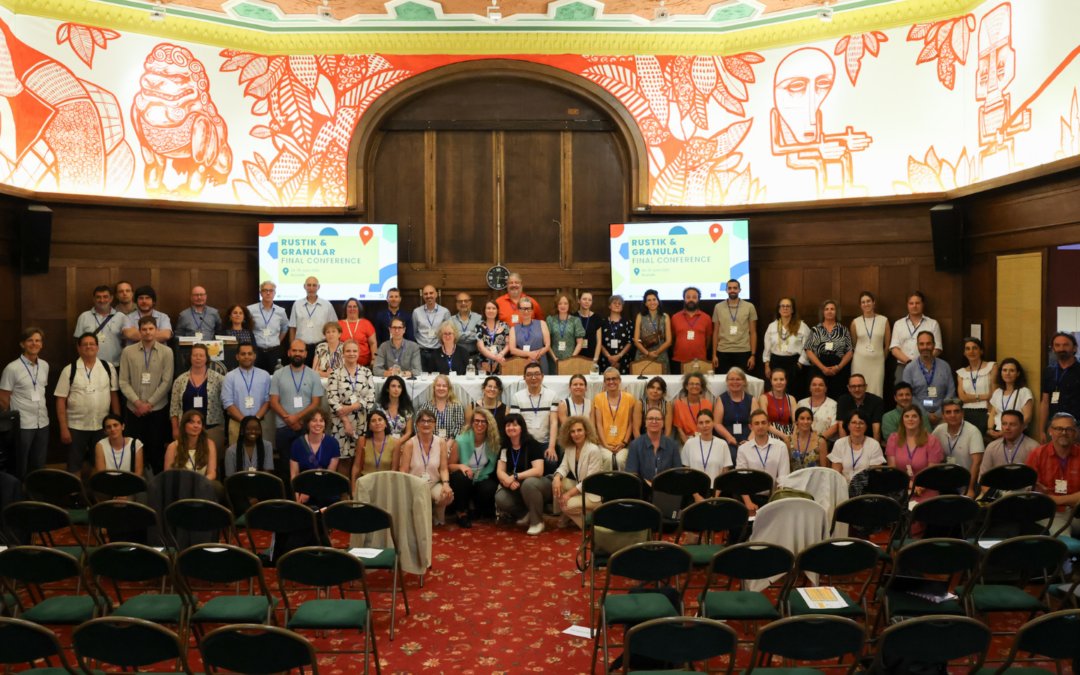
Recordings and highlights report from the bootcamp will be published soon. These were the two final online events organised within the framework of the GRANULAR project, setting the scene for the project’s final conference, which will take place in Brussels on 24 & 25 June 2026. The conference will be organised jointly with GRANULAR’s sister project, RUSTIK. Save the date for the final conference – more information will be shared soon.