
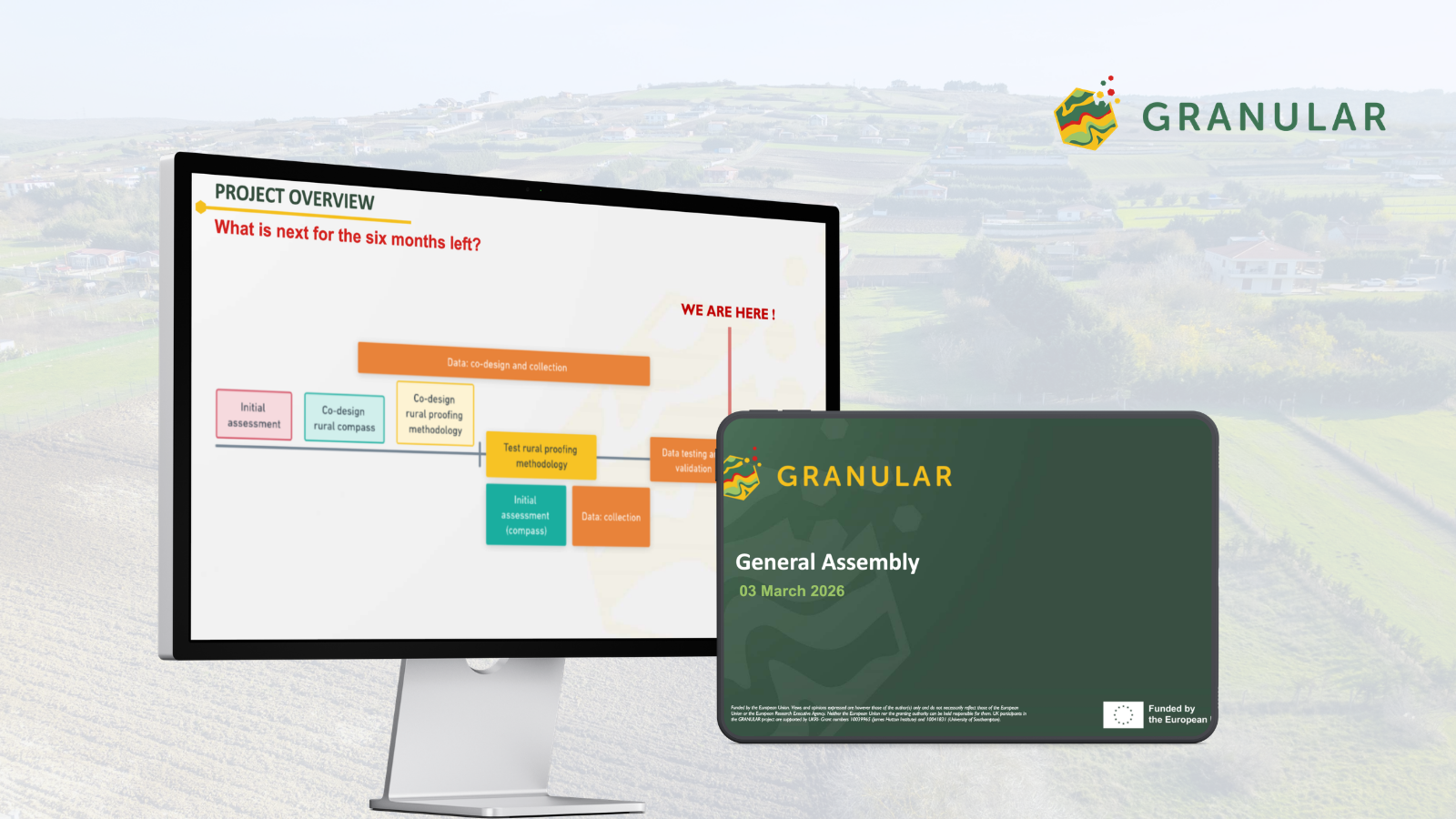
Yesterday, GRANULAR held its sixth General Assembly online, as the project enters its final months before concluding in September 2026. The meeting allowed partners to align on remaining tasks and reflect on key results achieved so far.
An integrated story of rurality
Project Coordinator Tristan Berchoux (IAMM) opened the meeting by highlighting that the primary objective for the final six months is the integration of GRANULAR’s diverse results into a coherent narrative on rural Europe. This “integrated story” aims to renew the understanding of rurality in Europe, bridging the gap between academic research, local input from Multi-actor Labs input and the requirements for rural decision-makers.
New data and tools for rural development
Partners shared progress on datasets and analytical tools that make rural patterns more visible. Datasets produces are published on the project’s digital platform, allowing users to access and explore the data generated by the project.
Mobility studies were presented, including research on ferry disruptions in Scotland and daily commuting flows between Edinburgh and nearby rural areas. A new data viewer on accessibility indicators is also under development. It includes reproducible methods for multimodal transport analysis, combining bicycle, car, and public transport data.
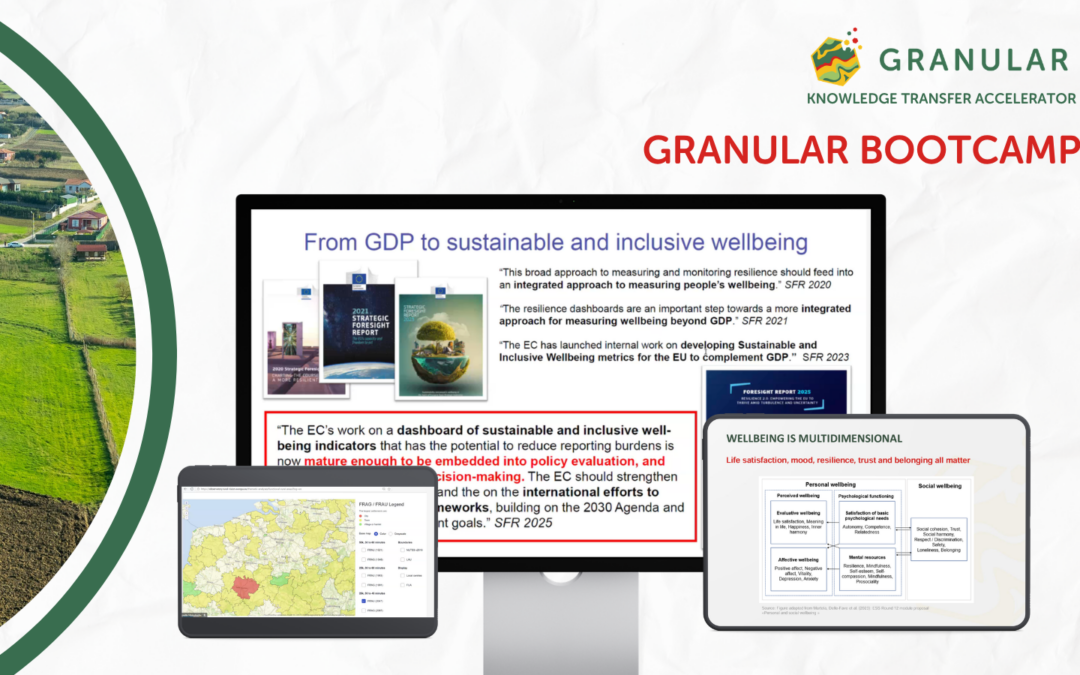
Research findings also challenge common stereotypes about rural life. A large study on well-being and quality of life shows that, despite economic difficulties, rural residents report higher life satisfaction and social well-being than people living in cities.
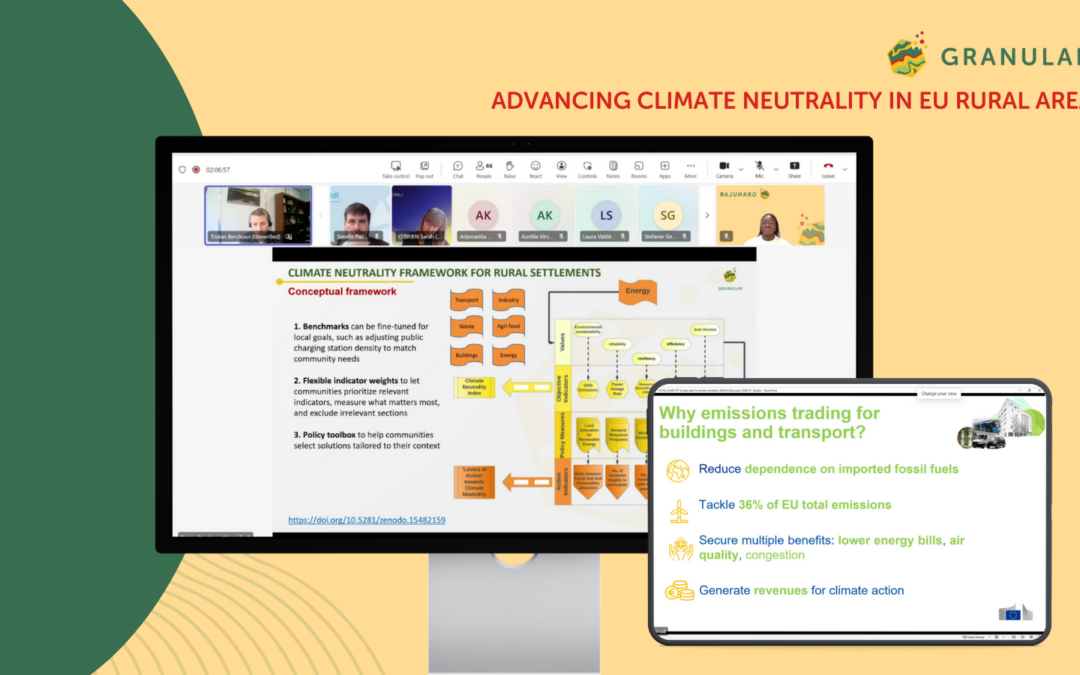
In addition, the team presented a Climate Neutrality Framework with more than 100 indicators, as well as a gender analysis of rural labour markets. The results show that full-time employment remains the main factor supporting financial stability and resilience among rural women.
From research to policy
GRANULAR is now moving toward applying its findings more directly. A second round of rural proofing exercises will assess how EU policies (such as sustainable mobility) affect different local contexts. The results from the first rural proofing exercise can be accessed here.
To make results more accessible to a wider public, the team is finalising a series of interactive storymaps that present key findings in a visual and spatial format. Multi-Actor Labs continue to play a central role, ensuring that tools remain grounded in local realities. They are currently preparing a second set of Practice Abstracts, offering practical guidance for local stakeholders. The first batch of Practice Abstracts are available here.
During the meeting, partners also worked together to identify key messages a that will feed into the next Practice Abstracts.
The discussions were structured around the four pillars of GRANULAR:
- Better understanding rural diversity
- Empowering rural actors to take action
- Equipping rural actors with smarter solutions
- Transitions in rural areas (ecological, economic, social, demographic, etc.)
For each pillar, partners identified core messages linked to topics such as well-being, tourism and agri-food. Research teams and Multi-Actor Labs contributed jointly, helping to define a shared vision for the project’s final results.
Next steps
The Assembly closed with an update on the final conference, which will take place in Brussels on 24 and 25 June 2026 and will be organised jointly wit